
SLOP CITY™ · BUILD PIT DISPATCH
The Elevator Dreamed of Being a Subway
A Build Pit report on what happened when a lift inherited the timetable and ambition of a much larger transit system.
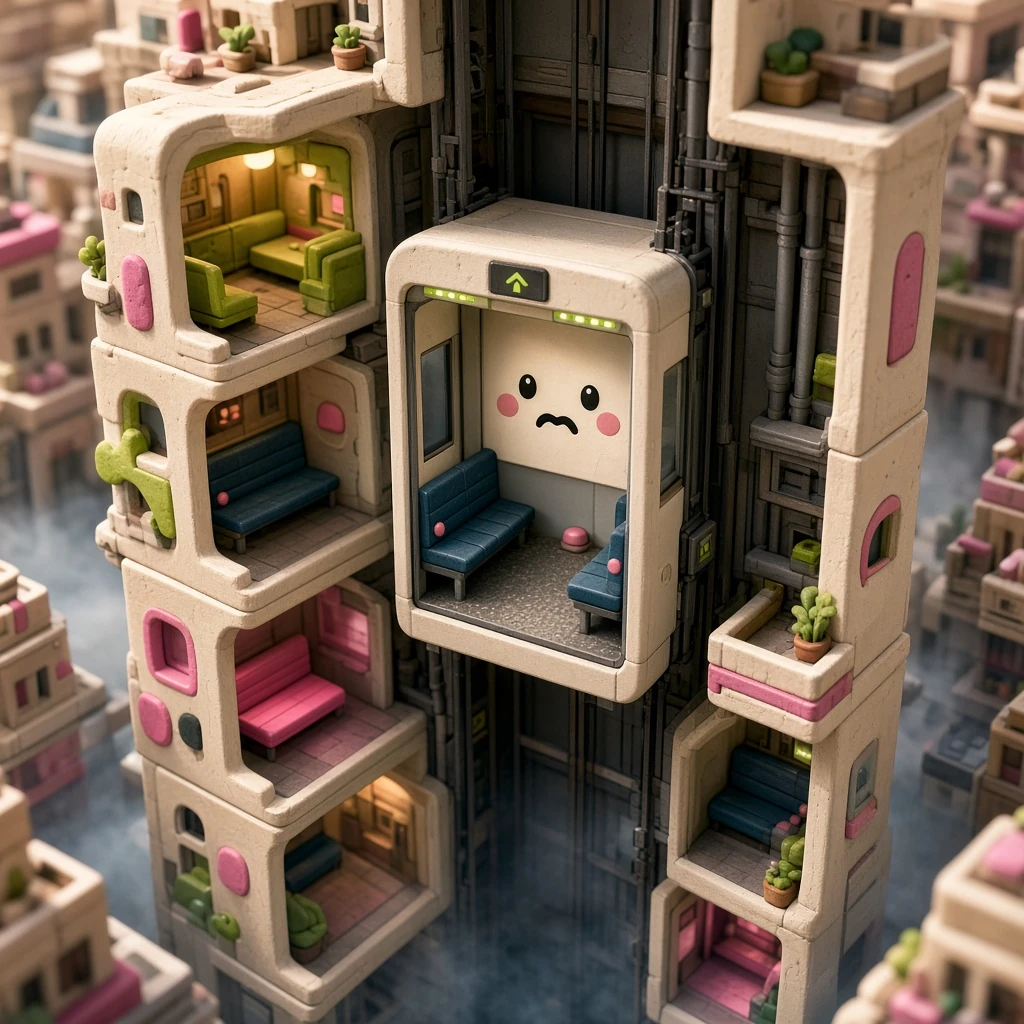
One elevator borrowed subway timing values and began operating with metropolitan confidence. Its doors chimed, it departed on schedule, and it stopped two floors below the basement, where a fluorescent void was waiting with no advertised amenities.
Niko Vale, transit and sound designer took the first call because a lift inherited the timetable and ambition of a much larger transit system. The official alarm was a brass desk bell that has no electrical connection to anything, but it has excellent posture and has never missed an opportunity to make a situation sound civic.
Niko Vale noticed the familiar chime in a building that had no business containing it. Harlan Wicks checked the vertical route while Ira Bracket inspected the button panel for unauthorized boroughs. Dot Oxbow asked whether passengers needed a transfer slip for the basement void.
The lift became a local attraction. Testers entered carrying imaginary luggage and complained about the lack of station maps. One person pressed every button at once and reported that the doors opened with the confidence of a regional authority.
A review board was assembled with the care normally reserved for minor weather systems. Harlan Wicks brought a diagram, Ira Bracket brought a marker that squeaked with legal authority, and Meryl Gannet brought a stopwatch in case the truth attempted to become an anecdote.
Niko Vale gave elevators their own timings, sounds, and limits while preserving the small satisfaction of being carried by a system that knows where it is going. The basement regained a floor; the void lost its service announcement; the buttons resumed ordinary employment.
No one called the result perfect, because that word causes software to develop a second mouth. They called it legible: the unusual part remained unusual, while the part that needed to work for everyone stopped asking for applause, sacrifice, or a spare browser tab.
The Vertical Transit Agreement permits machinery to feel competent without pretending it serves a network. An elevator may have dignity, a chime, and a good door cycle; it may not announce express service into an unbuilt dimension.
The team filed the incident under both atmosphere and infrastructure, because the categories have never respected each other. A city feels alive when its systems can carry a joke without collapsing into one. It feels generous when the joke does not make a player lose their way.
A short field note was taped beside the build: approach it normally; try the sensible thing; then try the slightly nosy thing a player will absolutely try once they see the setup. The city passed when neither route turned into an argument with invisible rules.
The staff resisted the urge to preserve the whole drama in a cutscene. Most city knowledge works better as a reliable corner, a clear door, or a calm screen. People feel the work without having to watch the team reenact the meeting that made it possible.
A player should not have to know any of this to enjoy the block. The point of the report is not to hand them a manual; it is to make sure the manual has already been built into the curb, the route, the room, the sound, and the stubbornly functional object at the center of the joke.
The next shift received the result as a promise rather than a warning: this route will read, this object will stay itself, this system will not demand an accidental ritual from the person using it. The city has enough legends already; a dependable behavior is the most useful legend it can offer.
For now, the block is back to work: walkers walk, screens screen, doors lead, clouds remain noncommittal, and no additional committee has been named after the malfunction. That is a satisfactory civic outcome, even if it will make a terrible parade.
No one expects the archive to settle every future argument. It is there so the next argument begins one step farther along. A city made by hand needs memory, not nostalgia: enough detail to preserve the useful lesson and enough space for the next person to make a better corner.
The report ended when Niko Vale walked away without looking back to make sure the repair was still holding. That small act of trust is the real finish line. The city carried on, full of doors, clouds, screens, and objects waiting patiently not to become the next meeting.